Community Health Promotion Model
As
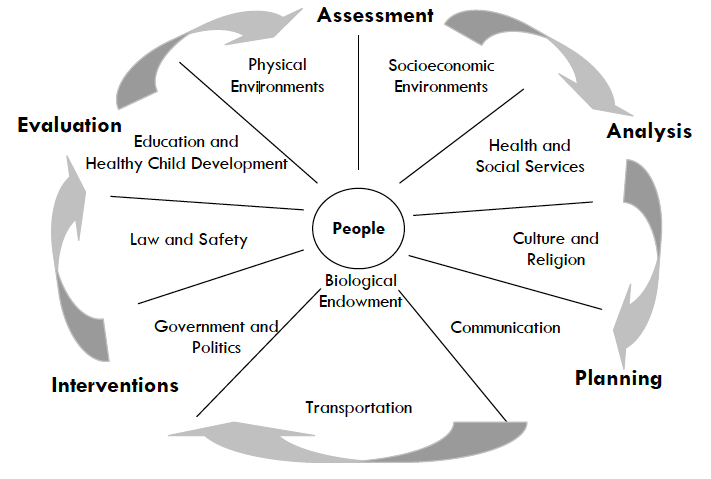
a group, we unanimously decided to use the community health promotion model (CHPM)
for our assessment of the Gastown community.
We chose this model as we felt it would be a straightforward framework
to use in our assessment and because it incorporates the nursing process
(assessment, analysis, planning, intervention, and evaluation) to create
practical plans of actions for community health promotion (Yiu, 2012). We also appreciated that the CHPM considers
the social determinants of health (SDOH), which allows for an examination of a
wide variety of social factors that may impact the health of a community (Yiu). We felt it was imperative to have an analysis
of the SDOH in our chosen assessment model because research shows that 75% of a
population’s health is related to social, economic, environmental, and biological
factors (Yiu). Additionally, the CHPM
has a basis in health promotion and therefore emphasizes prevention, reducing
social inequity, and public participation as appropriate strategies to improve
the health of a community (Yiu). In
closing, we felt that the CHPM draws from a wide variety of medical, nursing,
and sociological knowledge that presents a comprehensive and practicable model
for community assessment.
As a group, we unanimously decided to use the community health promotion model (CHPM) for our assessment of the Gastown community. We chose this model as we felt it would be a straightforward framework to use in our assessment and because it incorporates the nursing process (assessment, analysis, planning, intervention, and evaluation) to create practical plans of actions for community health promotion (Yiu, 2012). We also appreciated that the CHPM considers the social determinants of health (SDOH), which allows for an examination of a wide variety of social factors that may impact the health of a community (Yiu). We felt it was imperative to have an analysis of the SDOH in our chosen assessment model because research shows that 75% of a population’s health is related to social, economic, environmental, and biological factors (Yiu). Additionally, the CHPM has a basis in health promotion and therefore emphasizes prevention, reducing social inequity, and public participation as appropriate strategies to improve the health of a community (Yiu). In closing, we felt that the CHPM draws from a wide variety of medical, nursing, and sociological knowledge that presents a comprehensive and practicable model for community assessment.
Data Collection
Internet Search
Before conducting our community assessment, we collected quantitative data about the residents of Gastown by searching the internet for reputable health reports and statistical information (Yiu, 2012). We found the City of Vancouver website to be an especially valuable resource for information about health and social services in Gastown. We also collected data from the 2006 Canadian census to get an idea of the demographics in this area.
Windshield Survey
To collect data for our community assessment we chose to first explore Gastown by means of a windshield survey. A windshield survey is a type of environmental scan by which a community health nurse (CHN) drives or walks around the area and uses all the senses to get a feel of the area and the people that live there (Yiu, 2012). At 4pm on January 16, 2014, the five of us met at the corner of West Cordova and Richards in Gastown. Discouraged by the prohibitive cost of parking in this area, we decided to conduct our initial survey by car. We explored every street and back alley within the boundary of Gastown and took over 100 pictures of sights that seemed important for us to consider. Our assessment included the types of housing and resources available, the condition and cleanliness of the streets, and the types of people in this area. We noted a large population of homeless people within Gastown, especially in alleys and in areas closer to Hastings Street, and decided that this aggregate was likely particularly vulnerable for inequity and disease.
1. What sort of resources do you use in your community? Are they readily available to you?
2. What do you perceive as a need of your community? Why?
3. What do you perceive as strength in your community? Why?
4. How do you feel about cost of living and required resources in your community?
5. Any other positive/negative aspects of your community that you think are worth addressing?
After analysis of our assessment data using the community health promotion model, we chose to focus on the following three subsystems for the purposes of this project: physical environment, health and social services, and transportation.
Physical Environment
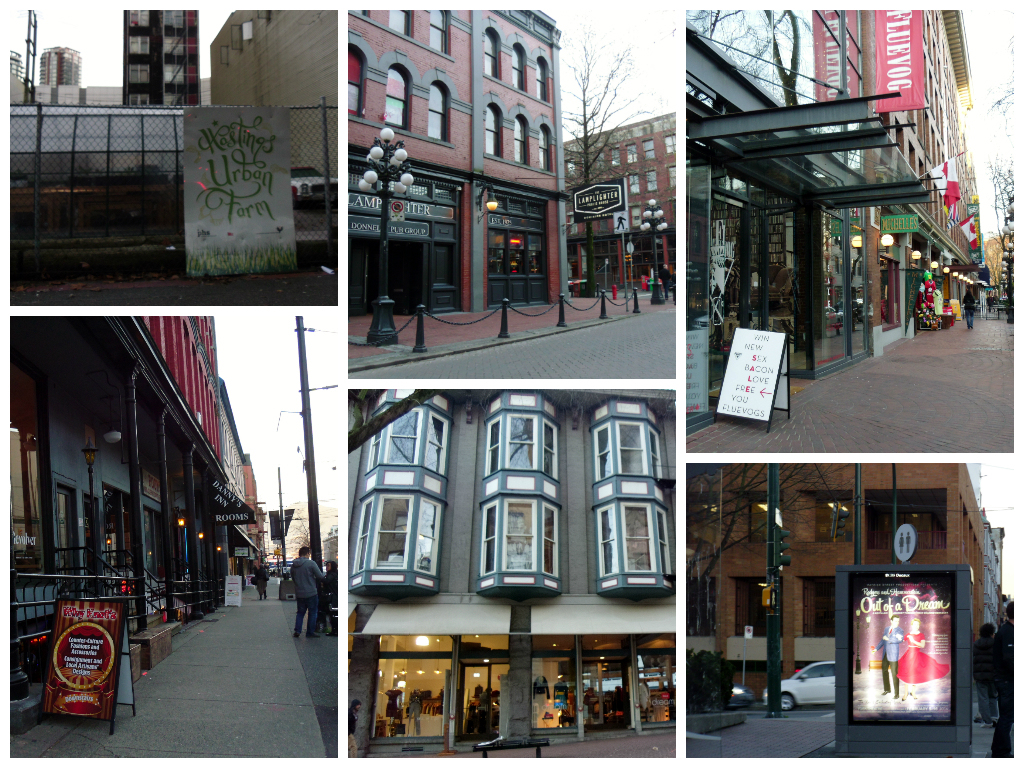
Physical environment is an important consideration when assessing a community because various physical, chemical, biological, social, and psychosocial factors in the environment affect health and quality of life (World Health Organization, 2007). In many areas of the world, cities and neighbourhoods are located in detrimental geographical areas or have physical characteristics that can expose entire populations to health risks (Yiu, 2012). Furthermore, inadequate housing and poor environmental conditions can cause stress and lead to states of ill-health (Mikkonen & Raphael, 2010).
Gastown has a consistent and distinctive type of architecture that provides a unified physical environment (Roe, 2012). The area's buildings have a common Late Victorian and Edwardian commercial facade, which illustrates the main development period of 1887 to 1914 (Smith, 2003). However, towards Hastings Street and behind the cobblestone streets of Gastown are alleyways that paint an entirely different picture. We found that many alleyways were littered with garbage and covered with graffiti; although some graffiti was positive and beautiful, others were crude and unsightly. Uncollected garbage, also attracts many troublesome pests such as mice, rats and cockroaches to the area (Wearing, 2009). In regards to social determinants of health, lack of sanitation and the presence of vermin are both factors associated with adverse health outcomes for people in a community (Mikkonen & Raphael). In major cities such as Vancouver and Toronto, pest control companies are receiving more calls to exterminate rats than ever before (Wearing).
Needs and Assets
According to the people we met in Gastown, rodents have become a significant issue within their community. One resident we interviewed stated that the community gardens on Hastings street have also contributed to the growing rodent problem. He stated that though these gardens offer access to fresh food, they also cause concerns among the community members about rats and the possibility of spreading disease. The garbage in the alleyways is also a major contributing factor to the pest problem. When conducting the windshield survey, two of our members witnessed the rodent issue first-hand when they observed large rats scurrying across an alleyway. In an effort to clean up the area, the Gastown Improvement Society (GIS) hires United We Can cleaning company four days a week for garbage clean up and street cleaning (Gastown Business Improvement Society, 2014). The goal of the GIS is to consistently keep the streets and alleys of Gastown free of garbage, to safely dispose of drug paraphernalia, and to clear the alleys of discarded items (Gastown Business Improvement Society). Although Gastown has two 24 hour self-cleaning public washrooms to deter public urination (equipped with blue lights that prevent IV drug users from being able to identify veins), these facilities can be hard to find and people commonly use the alleyways as washrooms; we noted that many alleys smelled of urine (City of Vancouver, 2012).
Gastown and the surrounding DTES area have significantly higher crime rates than other areas in Vancouver (City of Vancouver, 2012). Serious assaults and robbery are the most common crimes committed in this area (City of Vancouver). To address crime in this area, the Vancouver Police Department, along with the Gastown Business Improvement Society, patrol Gastown seven days a week to ensure that it is a safe place for tourists, local residents, and business owners alike (Gastown Improvement Society, 2014). As we surveyed Gastown, we also noticed the implementation of bright yellow 911 call boxes on streets corners near Hastings Street. These emergency telephones help to provide safety and security, and are especially important for the members of society that do not have access to a cell phone, or tourists who may be unfamiliar with local emergency service phone numbers. Another important point to consider is that many of Gastown’s homeless residents do not have ready access to telephones or cell phones. Although ambulances service Gastown, without the means to contact 911, residents do not have adequate access to health services in an emergency.
Between 2001 and 2006 the population of Gastown increased 15.8% (Vancouver Economic, 2009). Nevertheless, the actual increase in population is probably much higher due to the large homeless population that resides in the area. In recent years Gastown has seen an increase in the homeless population due to gentrification and the destruction of low-income housing units, such as the iconic Woodwards building (Smith, 2003). Although many of Gastown’s residents may be unaccounted for in the official census, the high population density in this area is very evident. According to the 2006 Canadian Census, the population density of this area is 10,504 people per square km, which is much denser than the 735 people per square km for the rest of Vancouver (Statistics Canada, 2006). High population density can be a concern for population health as overcrowding can facilitate the transmission of communicable diseases (Mikkonen & Raphael). Additionally, statistics show that most of the residents who live in Gastown reside in rental properties (Vancouver Economic). During a conversation with a local resident we learned that many of the rundown and low-cost rental apartments are home to multiple people who share a single occupancy apartment. According to Statistics Canada (2006), 10.9 % of the dwellings in Gastown are in need of repair. A resident of Gastown noted his concern for the condition of some low-income housing in the area. He stated that the problem with fixing these spaces is that the rents would also increase, thus leaving more people homeless or forced to share crowded living spaces.
Health & Social Services
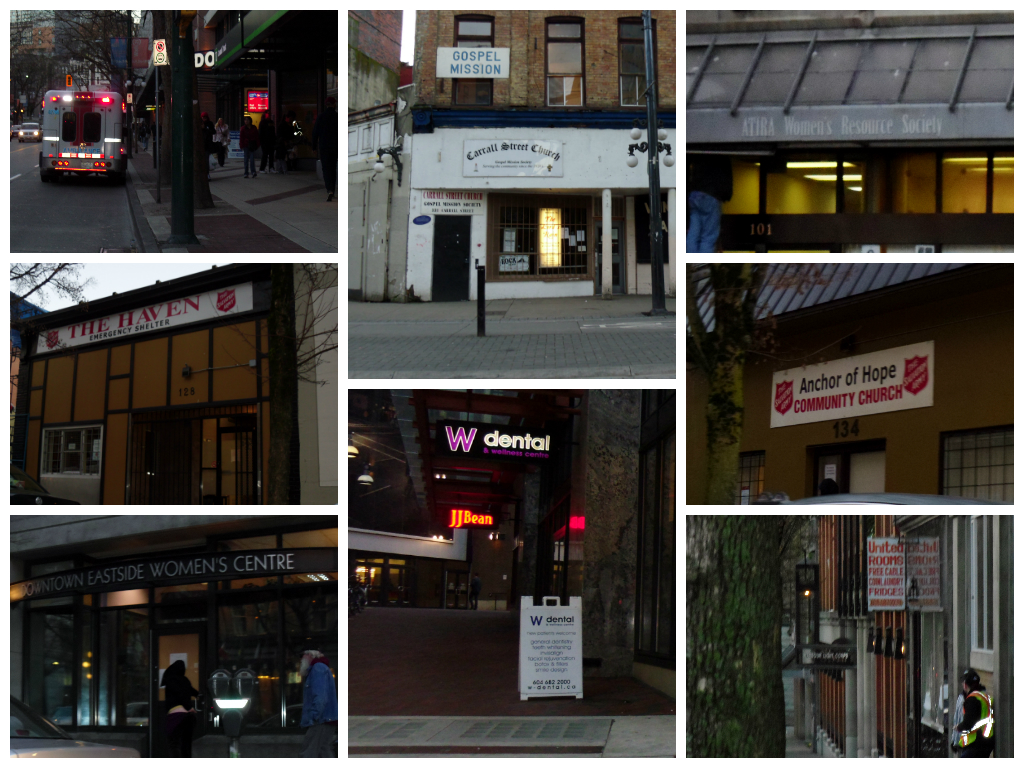
The presence of health and social services are necessary aspects of a community’s infrastructure in order to promote the health of individuals, families, and the community as a whole (Yiu, 2012). Canada's universal healthcare system grants all citizens equal access to essential health services regardless of age, gender, income, or health status (Mikkonen & Raphael, 2010). Hospitals, walk-in clinics, and dental offices are important community services that provide primary health care services; however, health services also include nutrition services, harm reduction programs, addictions services, and hospice care (Vancouver Coastal Health [VCH], 2013). Social services differ from health services in that they provide assistance and promote the social well-being of individuals within a community (Yiu). Welfare and unemployment benefits, for example, are types of social services available for individuals living below the poverty line (Yiu).
Many of the services we found during our assessment are unique to Gastown’s infrastructure, as they reflect the needs of a significant homeless population (Statistics Canada, 2006). According to one Gastown resident we spoke to, the most needed health and social services are those that address violence, mental illness, substance abuse, STIs and malnourishment. Our windshield assessment revealed that health services available to the residents of Gastown included a dental office, two detox centers, and several pharmacies. Furthermore, one resident stated that he frequently saw outreach nurses patrolling the more derelict areas of the community. Free and low-cost meal programs, low-income housing and shelters, as well as vocational services like career planning and job coaching, are examples of social services that are also available to Gastown residents.
Needs and Assets
One community asset identified by a resident was that several of the health services available overlap with one another, which he identified as beneficial because it increases the likelihood that individuals will use the available services. For example, in addition to meeting short-term housing requirements, many emergency shelters offer harm reduction programs for individuals with addictions issues (Yiu, 2012; Greater Vancouver Shelter Strategy [GVSS], 2013). Some shelters, like the Evelyne Saller Center, also offer social and life-skill development programs (City of Vancouver, 2012). Harbour Light Detox Center offers primary health care services, such as medical and mental health resources, in addition to detox and recovery programs (Harbour Light, 2012).
One Gastown resident with mobility issues identified what he thought was a glaring need in the community: He stated that several important health and social service centers lie outside the boundaries of Gastown, which made it difficult for him to access these services. In particular, he explained that the Pender Community Health Center, which provides walk-in clinic services as well as harm reduction and methadone maintenance programs (VCH, 2013), is difficult to access because it is not located within a convenient walking distance. Additionally, one woman we interviewed stated that she did not know of any walk-in clinics within the Gastown area and stated that she did not know where she would go to access this type of service.
A lack of health and social services for families is also a concern for this community. One resident we spoke to had young children and said she could not find daycare services within Gastown. She told us she works downtown but had to rely on public transit to take her two children to a daycare facility in the Mount Pleasant area, which she noted was very inconvenient for her family. Compared to the rest of Vancouver, Gastown is a relatively low-income area; the lack affordable and accessible daycare services can negatively affect the social development of children, and hinder a parent's ability to maintain gainful employment (Mikkonen & Raphael, 2010).
Transportation
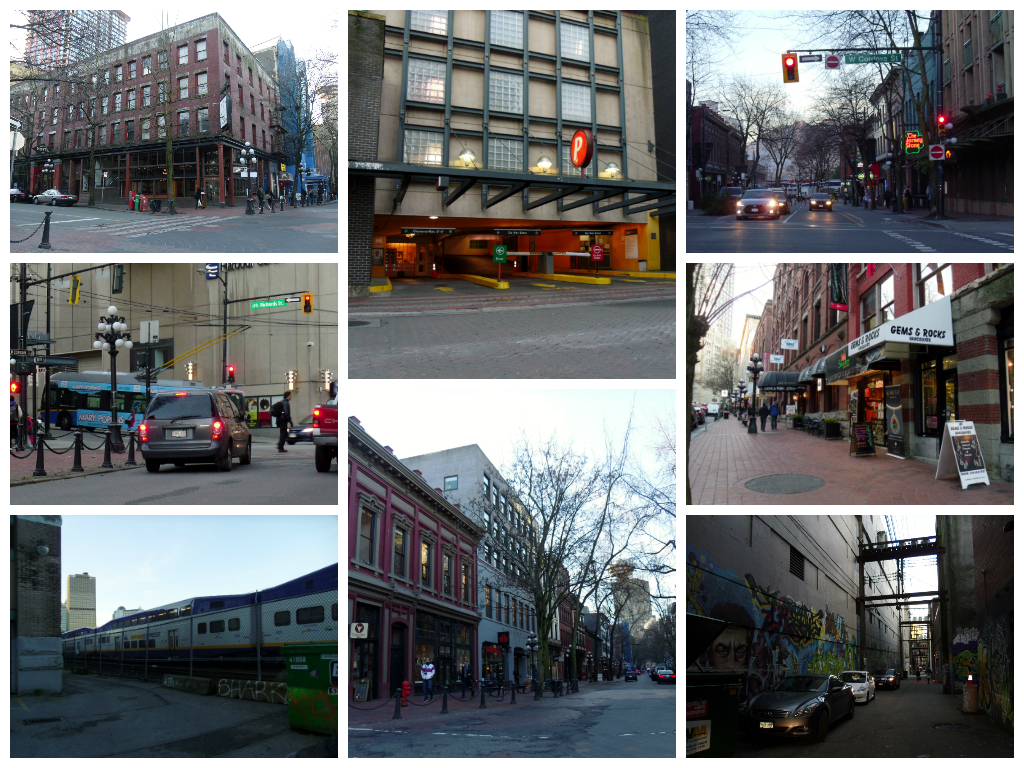
Reliable and affordable transportation systems are imperative to ensure that community members have adequate access to essential services (Stamler & Yui, 2012). Gastown’s trendy boutiques, eclectic eateries, famous monuments, and rich history draws residents and visitors to its streets on a daily basis (Roe, 2012). Vancouver’s largest transportation hub, Waterfront Station, is located just two blocks west of Gastown, allowing approximately 35,000 passengers to commute in and out of the nearby areas daily (Translink, 2013). Waterfront station operates seven days a week and houses the Canada Line, West Coast Express, Expo and Millennium SkyTrain lines, as well as the Seabus terminal to North Vancouver (Translink). Numerous bus stops are located along the major bordering streets of Gastown, offering a wide variety of travel routes to and from the area (Translink). Taxis are commonly seen driving around the area and are available to individuals who do not wish to utilize public transit or are in need of transportation after public transit’s designated hours of operation. Gastown is also an easily accessible community for all pedestrians, including individuals with physical disabilities and the elderly. All forms of public transit in Gastown are wheelchair accessible, there are ramps on each street corner, sidewalks are wide and level, many crosswalks have auditory signalling for the visually impaired, and numerous wheelchair accessible shops and restaurants line the roads.
There are two major commercial transportation corridors that run through the heart of Gastown: Water and Cordova streets. They are both high-volume traffic routes for pedestrians, vehicles, and bicycles and average 22,000 to 25,000 vehicles per day (Gastown Business Improvement Society, 2014). One-way streets are commonplace in Gastown, due to the narrowness of the historic cobblestone roadways. Parking lots, parkades, and metered street parking are available for drivers in the community. There are designated bicycle routes/lanes running along the community's border, as well as directly through the heart of Gastown for the safety and convenience of cyclists. All modes of transportation observed were heavily utilized during our daytime and evening assessments.
Needs and Assets
One community deficiency that was identified by residents and commuters alike was the lack of affordable or free parking available. If drivers wish to park for free, they must acquire a parking spot outside of Gastown, leaving them inconveniently distanced from their destination. Nevertheless, many people noted that public transportation is a cost-efficient alternative to driving and just as easy for accessing the area without the worry of finding an available parking spot, while concurrently reducing gas emissions.
Another concern voiced during our assessment was that the narrow one-way streets can be difficult and confusing for drivers navigating the area. The narrow single lane one-way streets, in combination with high traffic volume, limit the ability for drivers to pull aside for passenger pick-ups and drop-offs. An asset, however, is that the single-lane one-way streets limit the flow of traffic into the area, encouraging the use of vehicle-free commuting. The reduction of vehicle traffic is also beneficial to the safety of pedestrians, as we noted that jaywalking was evident throughout Gastown.
Water Street's visually appealing cobblestone is a major contributor to the areas historical character; however, it is also deteriorating due to major cracking and poses a risk for pedestrians and cyclists that frequent this street (Mackie, 2012). A few concerned cyclists noted the evident patchwork fixes all over the cobblestone streets in an attempt to correct the damage; however, the issue of public safety was still a concern. Because the cobblestone is such an iconic part of the Gastown community and charm that draws tourists to the area, the city is determined to develop a solution (Mackie). According to the Vancouver Sun newspaper, the cobblestone roads were not originally designed to bear the weight of the thousands of vehicles currently passing along Water Street everyday (Mackie). The City of Vancouver's planning and engineering departments are now working on a plan to replace the roads with a safer, more durable road surfacing alternative, which also maintains the character of the historic cobblestone in this area (Mackie).
